
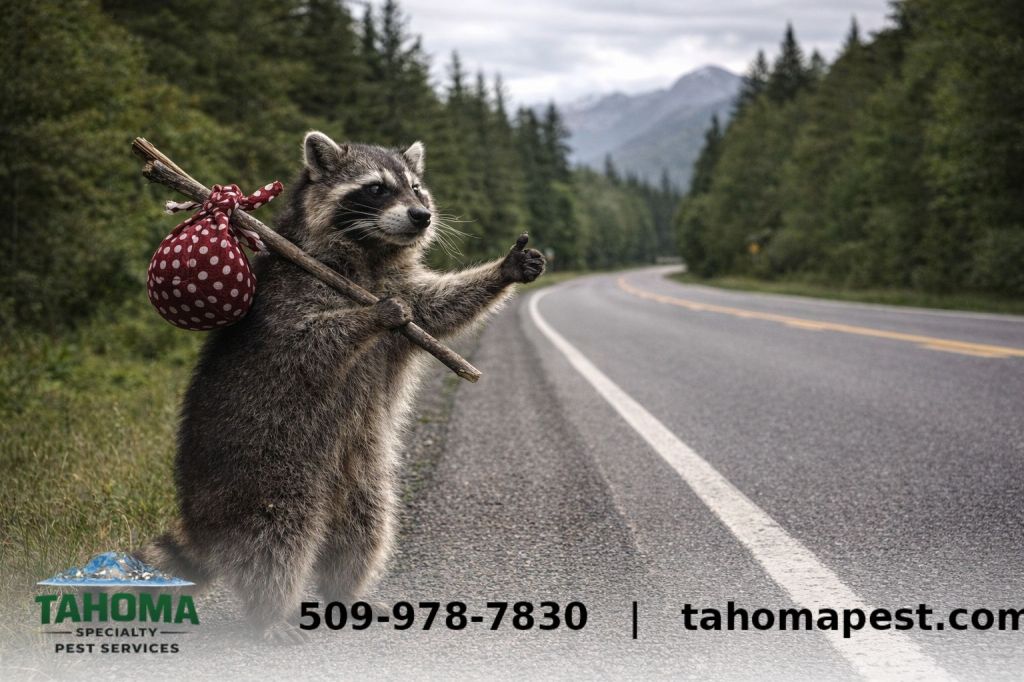
A common question is whether wildlife can simply be trapped and relocated somewhere else.
It sounds like a straightforward solution—but in most cases, it’s not allowed, and it’s not effective.
In Washington, relocating wildlife is heavily regulated. Outside of very specific situations (such as certain beaver relocations under proper permitting), both the public and licensed operators are generally not allowed to trap and relocate animals to a new area.
There are good reasons for this.
Most wildlife is territorial. Moving an animal into a new area often puts it into conflict with others already established there.
Survival rates after relocation are also low. Animals depend on familiar food sources, shelter, and travel patterns. When moved, they often struggle to adapt.
Because of this, relocation is usually not the responsible solution.
In most cases, the options are limited to:
releasing the animal on-site (when appropriate), or
resolving the issue in a way that addresses the problem directly
That’s why the focus of professional wildlife control isn’t just on the animal—it’s on the conflict.
As I often tell customers:
“My job is to eliminate conflicts, not necessarily eliminate critters.”
That can involve identifying how the animal is accessing the area, correcting conditions that are attracting it, or using techniques like harassment and hazing to encourage it to move on.
Not every situation requires removal, and not every job should be done. In some cases, the right approach is simply understanding what’s happening and letting wildlife be.
Tahoma Specialty Pest Services takes a practical, conservation-minded approach—focused on solving problems while respecting the role wildlife plays in the environment.
Tahoma Specialty Pest Services
509-978-7830
tahomapest.com

 Tahoma Specialty Pest Services