Why You’re Seeing Millipedes Around Your Home

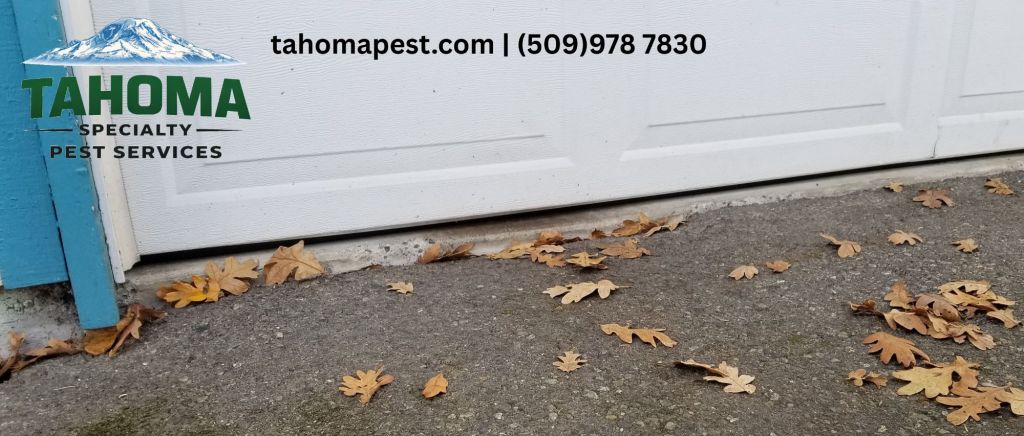
If you’ve noticed millipedes on your driveway, walkways, around the front door, in the garage, or even on the exterior of your home, you’re not alone — especially in newer developments.
I tend to see this most often around newer construction neighborhoods where natural ground cover has recently been disturbed and replaced with fresh landscaping, concrete, and irrigated lawns.
Millipedes normally live in moist soil, leaf litter, and decaying organic material. When those environments are disrupted by construction and development, they often end up migrating into surrounding areas looking for moisture and shelter.
That’s why they commonly gather:
on concrete driveways and sidewalks
around garage doors
near foundation edges
and along the exterior of homes
Concrete and landscaping around newer homes can hold moisture surprisingly well, especially after watering or rain, creating ideal conditions for them to wander through the area.
The good news is that millipedes are mostly a nuisance pest. They don’t bite, sting, or damage structures.
That said, large numbers can definitely become annoying.
The perimeter treatments I apply for ants, spiders, and other crawling insects will also help reduce millipede activity around the home. Treatment focuses on the exterior foundation, entry points, garage areas, and the conditions allowing them to gather in the first place.
Like many pest issues, it’s often less about the pest itself and more about the environment attracting them.
Tahoma Specialty Pest Services
509-978-7830
tahomapest.com

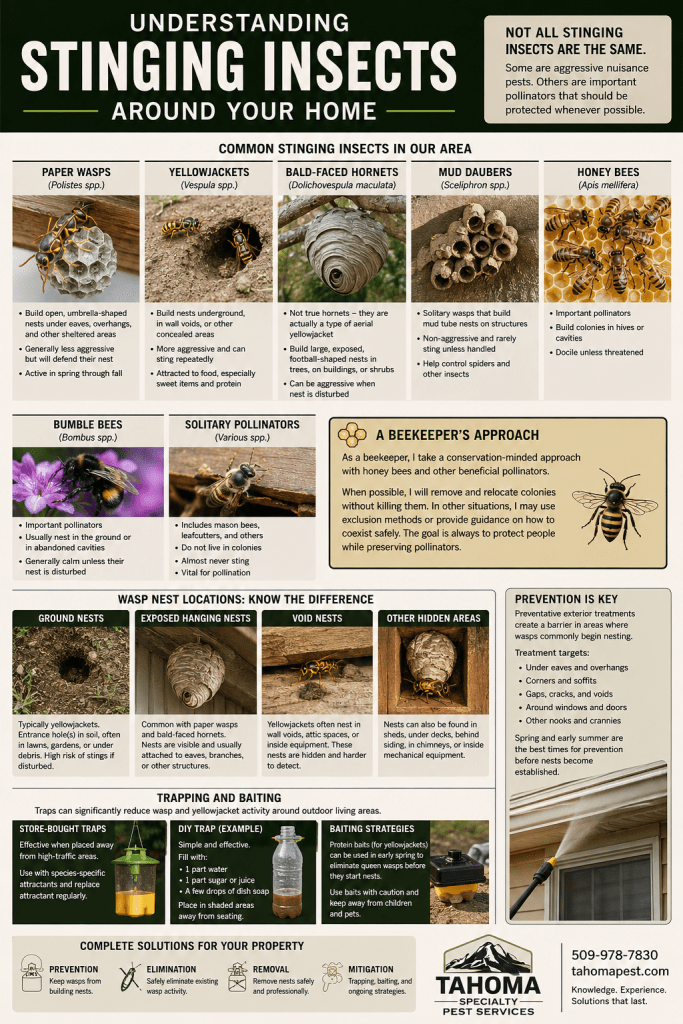
Understanding Stinging Insects Around Your Home

As temperatures warm up, stinging insect activity begins increasing around homes and businesses throughout the Inland Northwest.
Not all stinging insects are the same, and understanding the differences is important when deciding how to handle them.
Some species are primarily nuisance pests, while others are important pollinators that should be protected whenever possible.
Common stinging insects seen in our area include:
paper wasps
yellowjackets
bald-faced hornets
mud daubers
honey bees
bumble bees
solitary native pollinators
Each behaves differently and builds nests in different locations.
Paper Wasps
Paper wasps commonly build small exposed nests under eaves, overhangs, railings, and sheltered areas around structures. While generally less aggressive than yellowjackets, they can still become a problem when nesting near entryways or high-traffic areas.
Yellowjackets
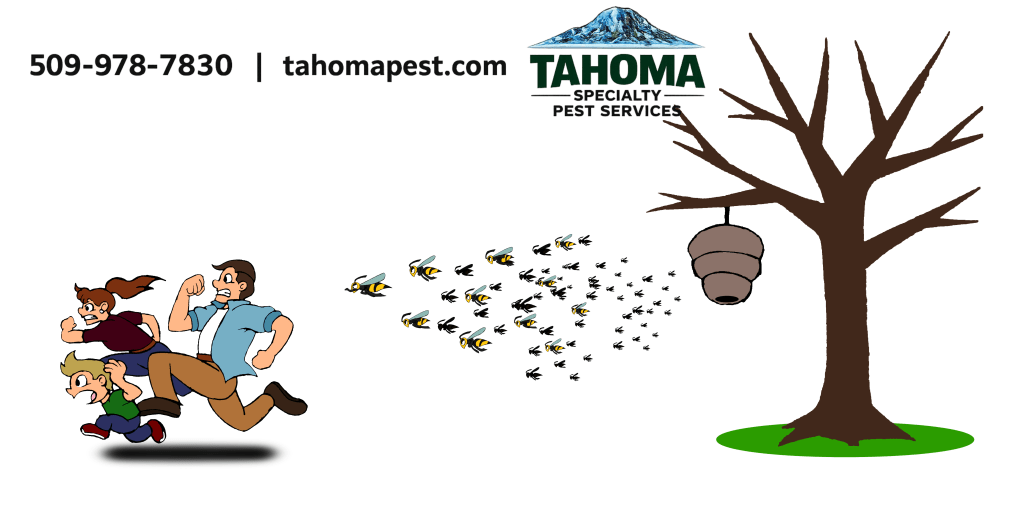
Yellowjackets are among the more aggressive species and are commonly associated with ground nests, wall voids, and hidden structural cavities. These are often the insects involved when someone accidentally disturbs a nest while mowing or working outside.
Bald-Faced Hornets
Despite the name, bald-faced hornets are not true hornets. They are actually a type of aerial yellowjacket. They build large exposed hanging nests in trees, shrubs, and on structures and can become defensive around the nest.
Mud Daubers
Mud daubers are solitary wasps that build mud tube nests on structures. Unlike social wasps, they are generally non-aggressive and are rarely a concern beyond the appearance of the nests themselves.
Honey Bees, Bumble Bees, and Native Pollinators
Not all stinging insects should automatically be eliminated.
Honey bees, bumble bees, and many solitary native pollinators play an important role in the environment and agriculture. As a beekeeper myself, I take a conservation-minded approach whenever possible.
In many cases, bee issues can be addressed without destroying the colony. Depending on the situation, this may involve relocation, removal, exclusion, or helping the homeowner understand whether action is even necessary.
Prevention Matters
One of the best ways to reduce wasp problems is preventing nests from becoming established in the first place.
Preventative exterior treatments focus on areas where wasps commonly begin building nests, including:
eaves
overhangs
corners and voids
siding gaps
nooks and crannies around the structure
Treatments are designed to reduce nesting activity before colonies become large and difficult to manage.
Trapping and Mitigation
Trapping can also help reduce activity around homes and outdoor living spaces.
There are effective commercial traps available, along with several DIY trapping methods that work surprisingly well when used correctly.
Depending on the situation, management may involve:
preventative treatment
nest elimination
removal of existing nests
trapping and baiting strategies
exclusion and structural recommendations
Like most pest issues, the best approach depends on the species involved and the specific situation around the property.
Tahoma Specialty Pest Services
509-978-7830
tahomapest.com
Seeing More Seed Bugs This Year? Here’s What’s Going On

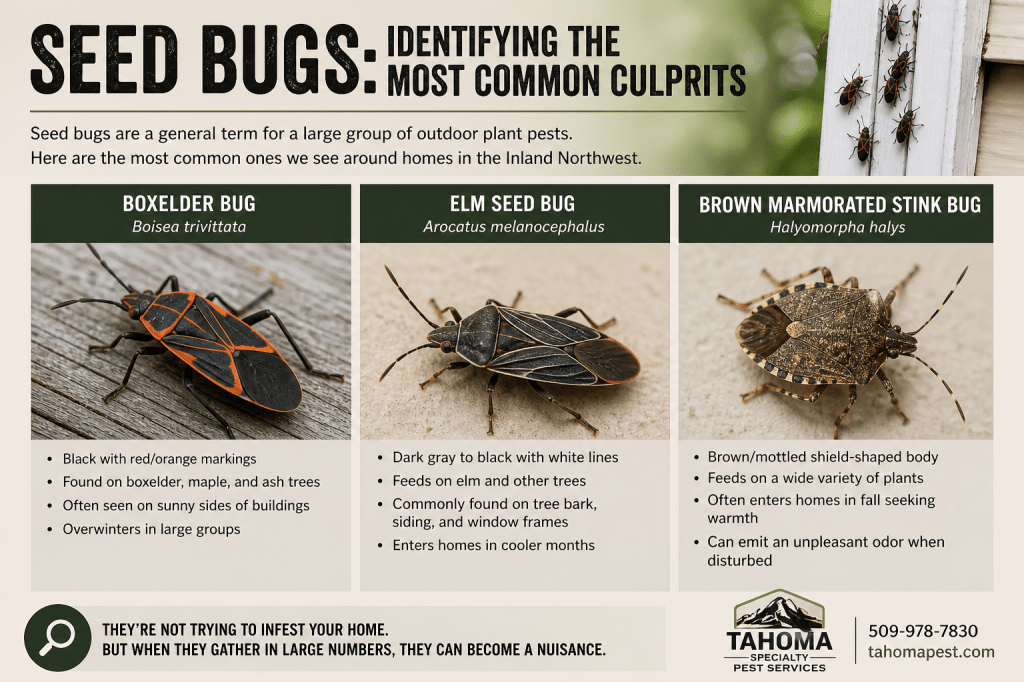
Seed bugs are a common issue around homes in this area, and this year they seem to be showing up in higher numbers than usual.

“Seed bugs” isn’t just one insect — it’s a general term people use for a group of outdoor plant-feeding insects. Around here, that often includes:

-boxelder bugs
-elm seed bugs
-stink bugs

These insects primarily live outdoors, feeding on plants and trees, but they tend to gather on homes in large numbers as temperatures shift.
You’ll usually see them:

-on sunny sides of the house
-around siding and foundations
-near doors, windows, and entry points

They’re not trying to infest the home, but once they gather in large numbers, some will find their way inside through small gaps and openings. That’s where they become a nuisance.
This year, activity seems heavier than normal, likely due to a milder winter. When conditions allow more of them to survive, populations build up quickly.
The key to controlling seed bugs isn’t chasing the ones you see inside — it’s managing what’s happening on the outside.
An exterior treatment, similar to what’s used for ants and spiders, is typically very effective. The focus is on:

-nooks and crannies
-warm surfaces where they gather
-entry points around the structure

Timing also matters.
Spring and fall are the most important times to stay ahead of activity and prevent large numbers from building up.
In more severe cases, especially during winter when bugs have already moved into wall voids or attic spaces, additional treatments such as attic fogging may be needed.

Like most pest issues, the goal isn’t just to react — it’s to get ahead of the conditions that allow the problem to develop in the first place.

Tahoma Specialty Pest Services
509-978-7830
tahomapest.com
Why Ant Problems Keep Coming Back (And What Actually Works)

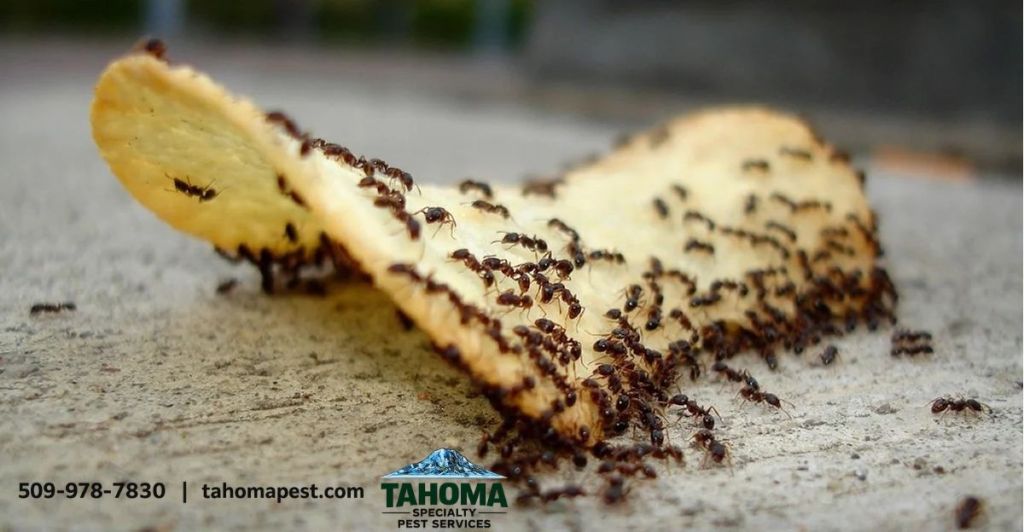
Ant problems are one of the most common issues homeowners deal with, especially as temperatures begin to warm up.
What most people don’t realize is that the way ants are treated often determines whether the problem actually goes away — or keeps coming back.
One of the biggest mistakes is using over-the-counter sprays inside the home.
With species like odorous house ants, spraying can actually make the problem worse. Instead of eliminating the colony, it can cause it to split and spread, leading to more activity in multiple areas.
Effective treatment focuses on the colony itself.
Interior treatments typically involve placing baits where ants are actively foraging. These baits are carried back to the colony, allowing it to be eliminated at the source.
On the exterior, treatments are applied around the structure to create a barrier and reduce incoming activity. Depending on conditions, this may involve liquid applications or granular materials during wetter periods.
Because materials don’t last indefinitely, and because ant pressure can change throughout the season, ongoing treatment is often the most effective way to maintain control.
At Tahoma Specialty Pest Services, we typically recommend service three times per year to stay ahead of activity.
We also take a different approach than many companies — there are no contracts. We call it satisfaction-based service. If you’re happy with the service and want it to continue, we keep going. If not, we don’t.
Ant treatments can also help reduce other crawling insects, including spiders, as part of the same process.
Tahoma Specialty Pest Services
509-978-7830
tahomapest.com
Where Animals Start Getting Into Homes Around Spokane in Early Spring

As temperatures begin to warm around Spokane, pest and wildlife activity begins to increase.
One of the most common issues this time of year isn’t just the animals themselves — it’s how they get into structures in the first place.
Many homes have small openings that go unnoticed until activity starts picking up in spring.
Common entry points include:
• gaps along rooflines and eaves
• attic vents and soffit openings
• areas where utilities enter the home
• damaged or loose vent screens
• gaps along foundations or under siding
Wildlife like squirrels, raccoons, and rodents are especially good at finding these weak points. Once inside, they can nest in attics, crawlspaces, or wall voids.
In many cases, the problem isn’t just removing the animal — it’s identifying and addressing the entry point that allowed it in.
Spring is often when these issues first become noticeable, as animals become more active and begin looking for shelter or nesting locations.
If you’re hearing movement, noticing damage, or seeing signs of activity, there’s usually a structural reason behind it.
Tahoma Specialty Pest Services
509-978-7830
tahomapest.com
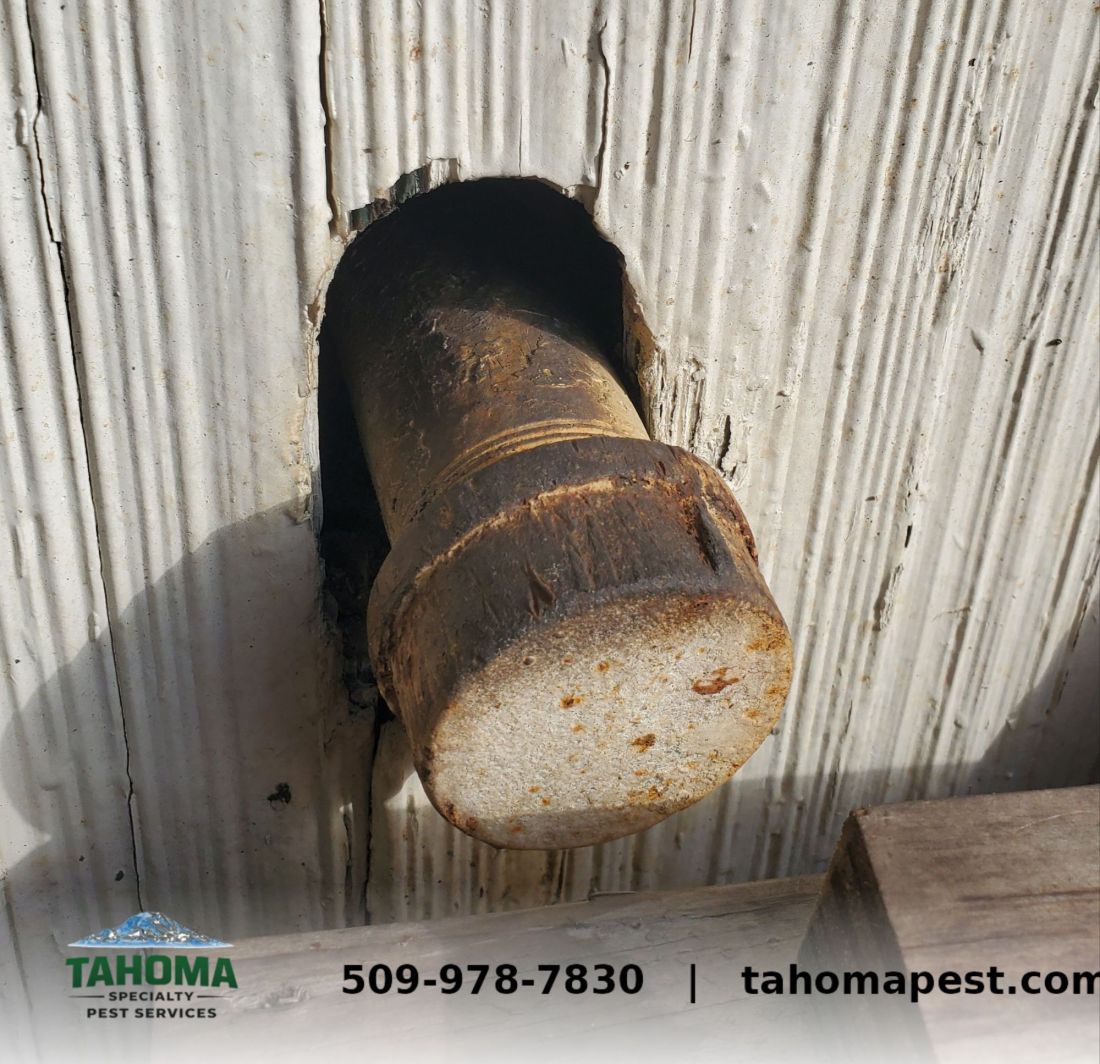
Why Wasps Start Showing Up Around Spokane Homes in Early Spring

As temperatures begin warming around Spokane, homeowners often start noticing a few wasps showing up around their property.

This can be surprising because it’s still early in the season. But these aren’t random insects wandering around — they’re queen wasps that have just emerged from winter hibernation.

Each spring, a single fertilized queen wakes up and begins searching for a place to start a new nest.

Common places queens scout include:

• roof eaves and overhangs
• sheds and outbuildings
• porch ceilings
• attic vents
• wall voids

At this stage, there is only one wasp, but she is looking for a protected location where she can begin building the first cells of a nest.

Once eggs are laid and the first workers emerge, the nest can grow quickly through late spring and summer.

Early-season sightings don’t necessarily mean a large nest is present yet — but they do mean queens are actively scouting around structures.

Tahoma Specialty Pest Services
509-978-7830
tahomapest.com
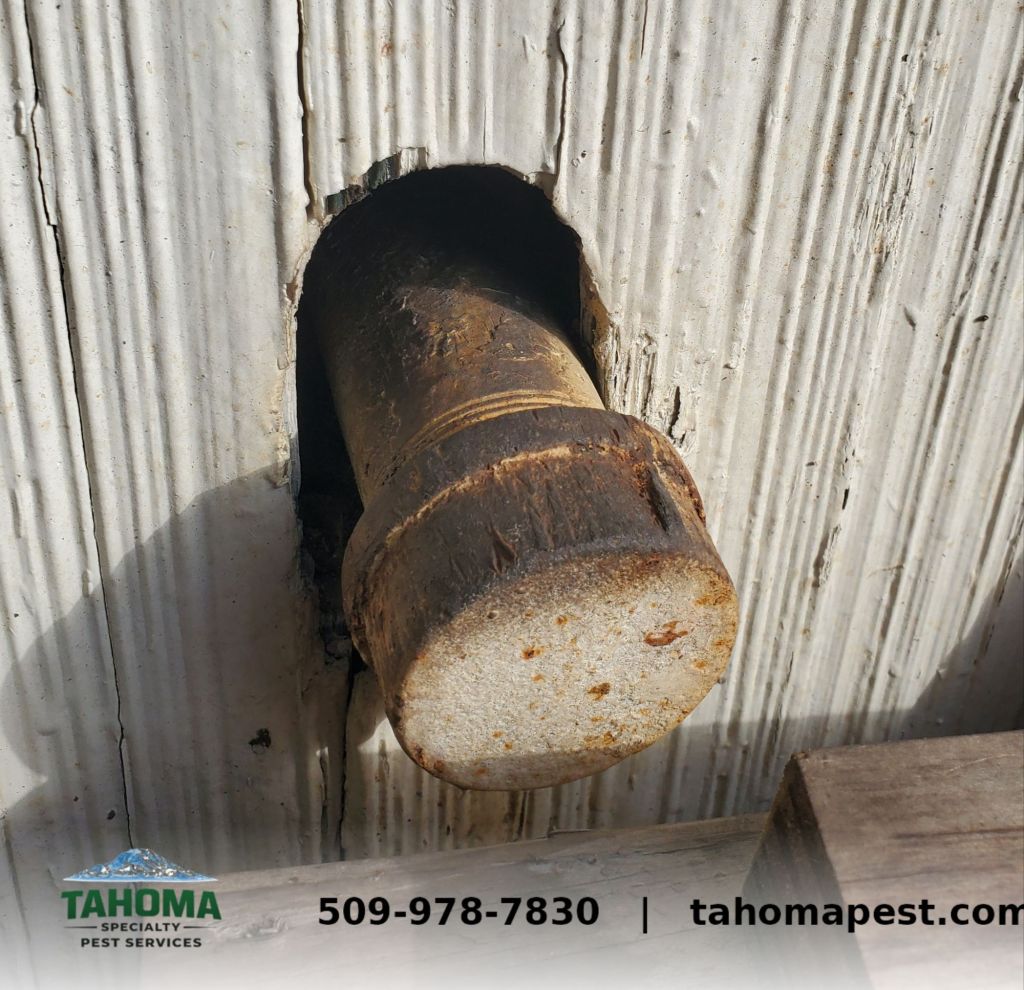
Marmots Are Waking Up Around Spokane

With spring approaching in the Inland Northwest, one of the first nuisance wildlife problems to reappear around Spokane is marmots.
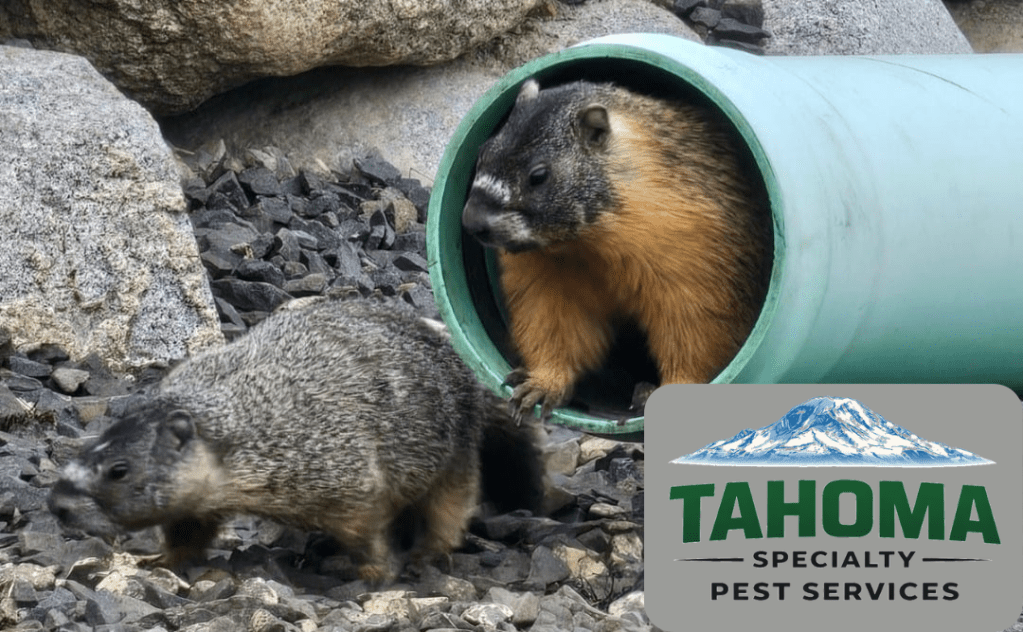
Also known as rock chucks or whistle pigs, these large burrowing rodents spend most of the winter in deep hibernation. As temperatures begin to warm, they start emerging hungry and ready to reclaim territory.
For homeowners, that’s often when the trouble begins.

Where They Show Up Around Homes
In the Spokane area.

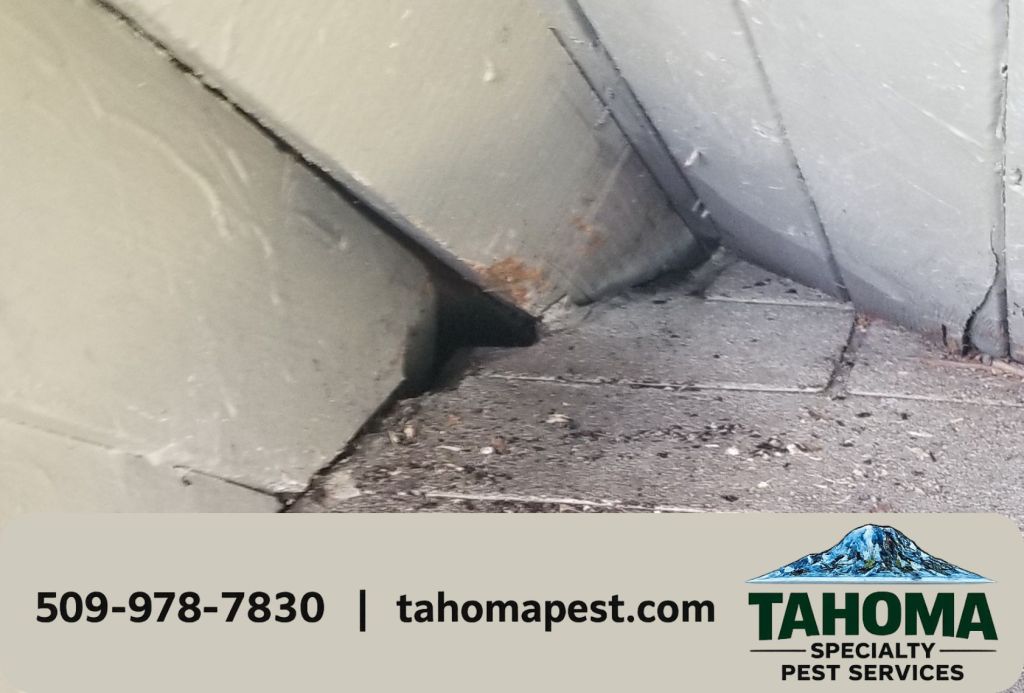
Marmots commonly burrow around:
-Retaining walls                                              -Concrete slabs
-Rock landscaping
-Foundations
-Decks and sheds
These burrow systems can extend 15–30 feet underground, and over time they can undermine structures and cause settling or collapse.
Areas along the Spokane River corridor and the I-90 area tend to see particularly heavy marmot activity.

Signs You Might Have Marmots Nearby

Homeowners usually notice:
Large burrow openings (6–10 inches wide)
Fresh dirt piles near rocks or structures
Chewed vegetation or garden damage
Marmots sunning themselves on rocks or retaining walls A sharp whistling alarm call (where the nickname whistle pig comes from)

Why Early Spring Matters

When marmots wake up from hibernation they immediately start:
Feeding heavily
Reestablishing territory
Preparing for breeding season
Addressing activity early in the season can prevent larger problems later in the year.
If you’re seeing marmot activity around your property in the Spokane area, early intervention is often the best approach.

Tahoma Specialty Pest Services
509-978-7830
tahomapest.com
#Spokane

#marmots

Spring Ant Season Is Coming Early in Spokane – 3 Things Homeowners Should Do Right Now.

If you’ve already spotted a few scout ants marching across your kitchen counter or along the baseboards in early March, you’re not imagining it. After a milder-than-usual winter across the Inland Northwest, ant activity is ramping up weeks ahead of the typical schedule in Spokane, Coeur d’Alene, and surrounding areas.
Carpenter ants, odorous house ants, and pavement ants are the usual early-spring troublemakers here. They don’t wait for summer—they start scouting for food, water, and nesting spots as soon as temperatures consistently hit the 50s.
The good news? You can knock back most early invasions with a few smart, low-effort moves before they turn into full trails or satellite nests. Here are the three most effective things Spokane-area homeowners can do right now:
Eliminate the attractants they’re after
Ants are on a mission for sweets, proteins, and moisture. Wipe counters with a 1:1 vinegar-water mix (disrupts their scent trails), store pantry goods in sealed containers, fix any slow drips under sinks, and take out trash/recycling daily. A single forgotten soda spill or pet-food bowl can feed dozens of scouts.
Seal the obvious entry points
Check windowsills, door thresholds, foundation cracks, and where pipes/utilities enter the house. Use silicone caulk for small gaps and steel wool + caulk for larger ones (ants can squeeze through openings as small as 1/16 inch). Weatherstripping on doors is a quick win too. Most early trails follow predictable paths—follow them backward to find the entry.
Know when to monitor vs. call in pros
A handful of scouts? Often just keep an eye on it after cleaning/sealing. Multiple trails, ants in walls, or sawdust-like frass (especially with carpenter ants)? That’s when professional treatment makes sense to prevent structural damage or bigger colonies. We’re big believers in honest assessments—not every sighting needs a full treatment right away.
Seeing more than a few scouts or already dealing with established trails indoors? Text or call us at 509-978-7830—we’ll give you a straight answer on whether it’s worth treating now or just monitoring through spring.
Ants don’t RSVP… but you can tell them the party’s over. 🐜🚪http://tahomapest.com