One of the most common questions I get is:
“I found a hole in my yard… what made it?”
The answer isn’t always obvious. Different animals leave different clues, and knowing what you’re looking at is the first step toward solving the problem correctly.
Here are some of the most common culprits we encounter around Spokane and the Inland Northwest.
🦫 Marmots
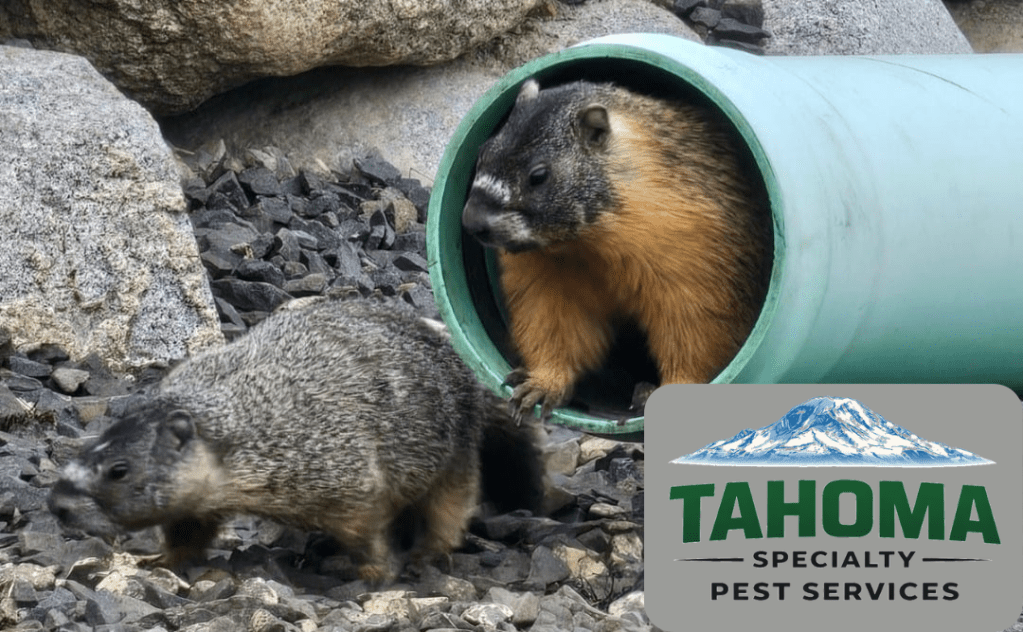
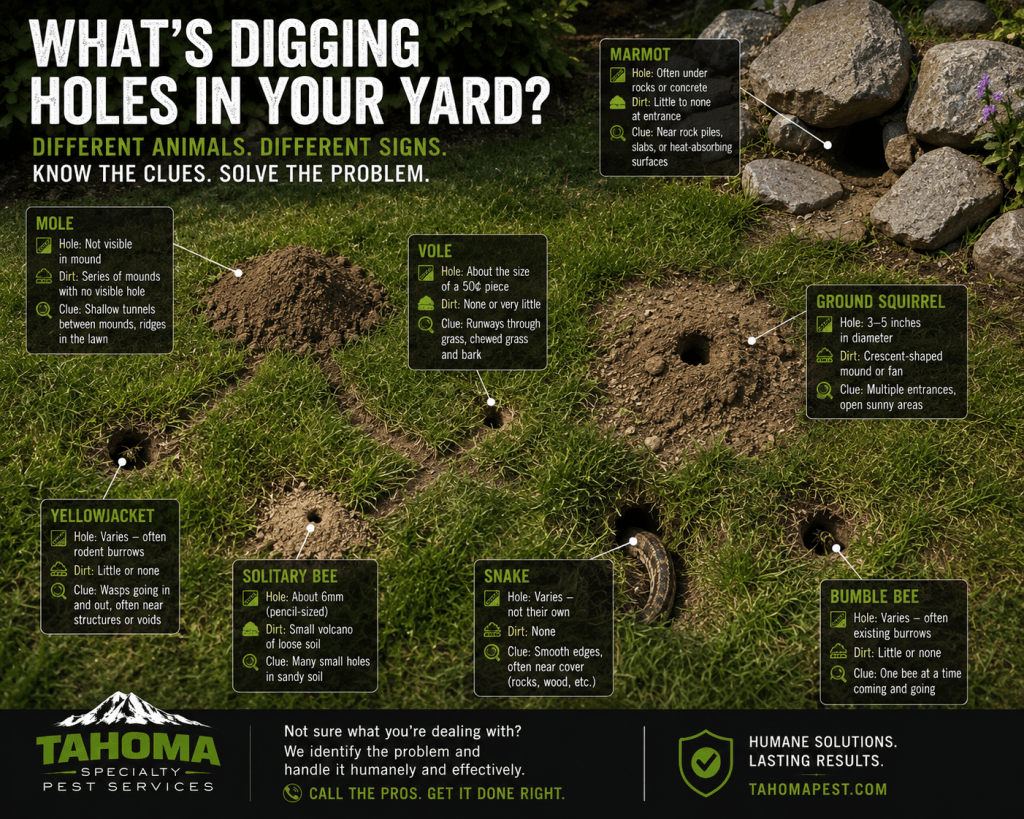
Marmots rarely dig a hole out in the middle of open ground. Instead, they usually take advantage of existing terrain.
Look for burrows:
Under rocks or boulder piles
Along concrete slabs
Near retaining walls
Under foundations or other heat-absorbing surfaces
If you see a large hole disappearing beneath riprap or a rock pile, there’s a good chance a marmot is involved.
🐿️ Ground Squirrels
Ground squirrels leave one of the easiest burrows to recognize.
Look for:
A hole about 3–5 inches across
A fan- or crescent-shaped mound of excavated dirt
Several active burrows in the same area
Open grassy fields, horse pastures, and agricultural land
For horse owners, these burrows can become a serious safety hazard.
🦡 Moles
People often blame moles for every hole they see, but moles actually leave very distinctive signs.
Look for:
A series of raised soil mounds
No obvious entrance hole in the mound
Shallow surface tunnels connecting the mounds
Moles spend most of their lives underground feeding on earthworms and insects.
🐭 Voles
Voles leave much smaller openings.
Look for:
A hole roughly the size of a 50-cent piece
Little or no loose soil around the entrance
Narrow runways through grass or vegetation
Unlike moles, voles often spend time above ground following these well-worn paths.
🐝 Bumble Bees & Yellowjackets
Not every hole belongs to a mammal.
Both bumble bees and yellowjackets commonly move into abandoned rodent burrows.
A few clues:
Little or no dirt around the entrance
A steady stream of insects flying in and out
Increased activity during warm afternoons
The insects didn’t dig the hole—they simply found a ready-made home.
🐝 Solitary Ground Bees
These beneficial pollinators create tiny pencil-sized holes in loose, sandy soil.
You’ll often notice:
Small volcano-shaped mounds of fine soil
Numerous individual holes spread across an area
Very little aggressive behavior toward people
These bees are important pollinators and are generally best left alone whenever possible.
🐍 Snakes
Snakes almost never dig their own burrows.
Instead, they use:
Abandoned rodent holes
Rock piles
Wood piles
Foundation voids
Other natural hiding places
Finding a snake near a hole doesn’t necessarily mean it made the hole.
Correct Identification Matters
Many burrows look similar at first glance, but treating the wrong animal wastes time, money, and often makes the problem worse.
Before choosing a treatment, it’s important to identify what’s actually living there.
At Tahoma Specialty Pest Services, inspection always comes first. Once we know what’s causing the problem, we can recommend the safest and most effective solution.
If you’ve discovered holes in your lawn, pasture, landscaping, or around your home and you’re not sure what’s responsible, we’re happy to help identify the culprit and develop a plan that actually solves the problem.
Tahoma Specialty Pest Services
Protecting homes, businesses, and property throughout Spokane and the Inland Northwest.
509-978-7830
🌐 tahomapest.com